Making Mid-air Button Contact Perceptible
Role
UX Researcher
Timeline
Jan 2025 - Jul 2025
Team
1 Engineer
Skill
Project Management
UX Research
Making the untouchable system easier to learn.
Buttons in VR lack physical contact, creating uncertainty around the exact moment and position of interaction.
We designed an adaptive feedback system that accelerates user adaptation, reducing the learning curve.
Stuck in a loop of trial and error without any progress.
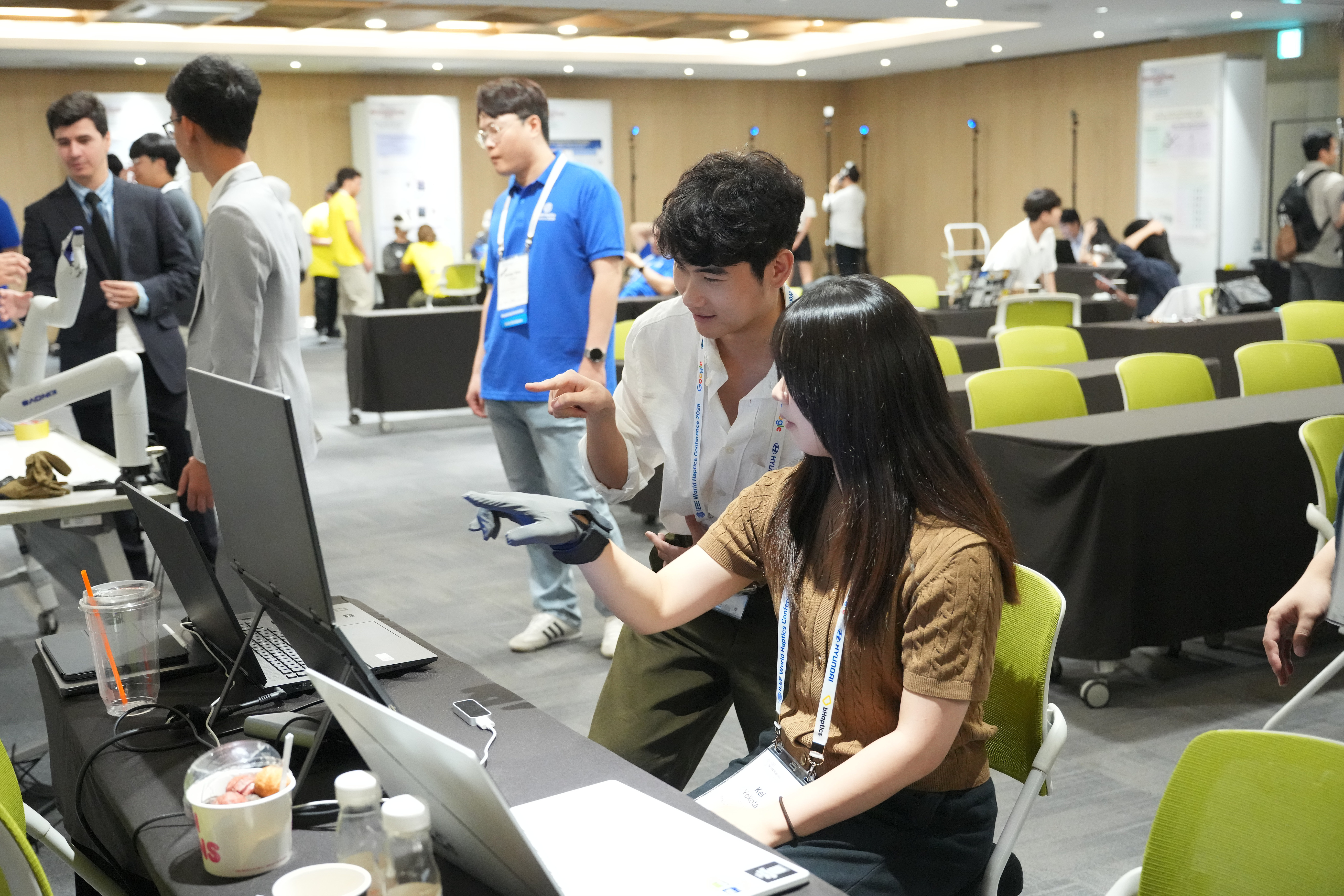
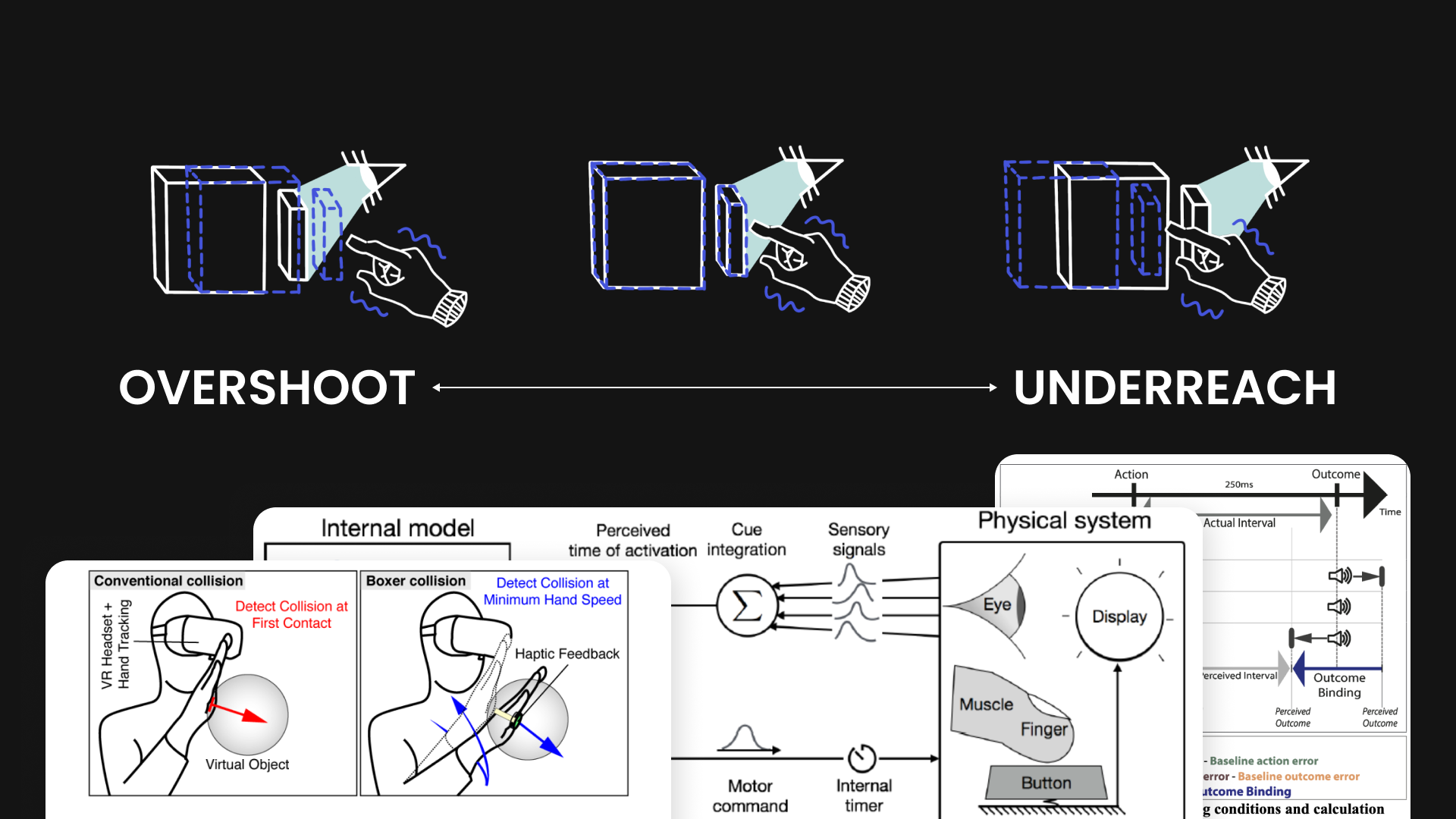
In virtual reality, users easily fall in a loop of overshoot* and underreach* with no idea of where to press exactly.
Over time, this erodes their sense of control and adds fatigue based on studies on button-press neuromechanics.
More to feel, less to figure out.
Instead of an alert sound or fixed vibration, the feedback gives spatial cues that guide the hand to the contact point based on each user's behavior. As a result, no one has to spend time figuring out where to press exactly.

Adaptive Haptic Feedback
The feedback point learns from each user's presses and shifts to match, instead of staying fixed. Ultimately, the user can learn the contact point faster and with less effort.
How did we measure "learning"?
We split it into two different questions that can be answered with numbers.
- Visual only
- Vibrotactile
- Visual + Vibrotactile
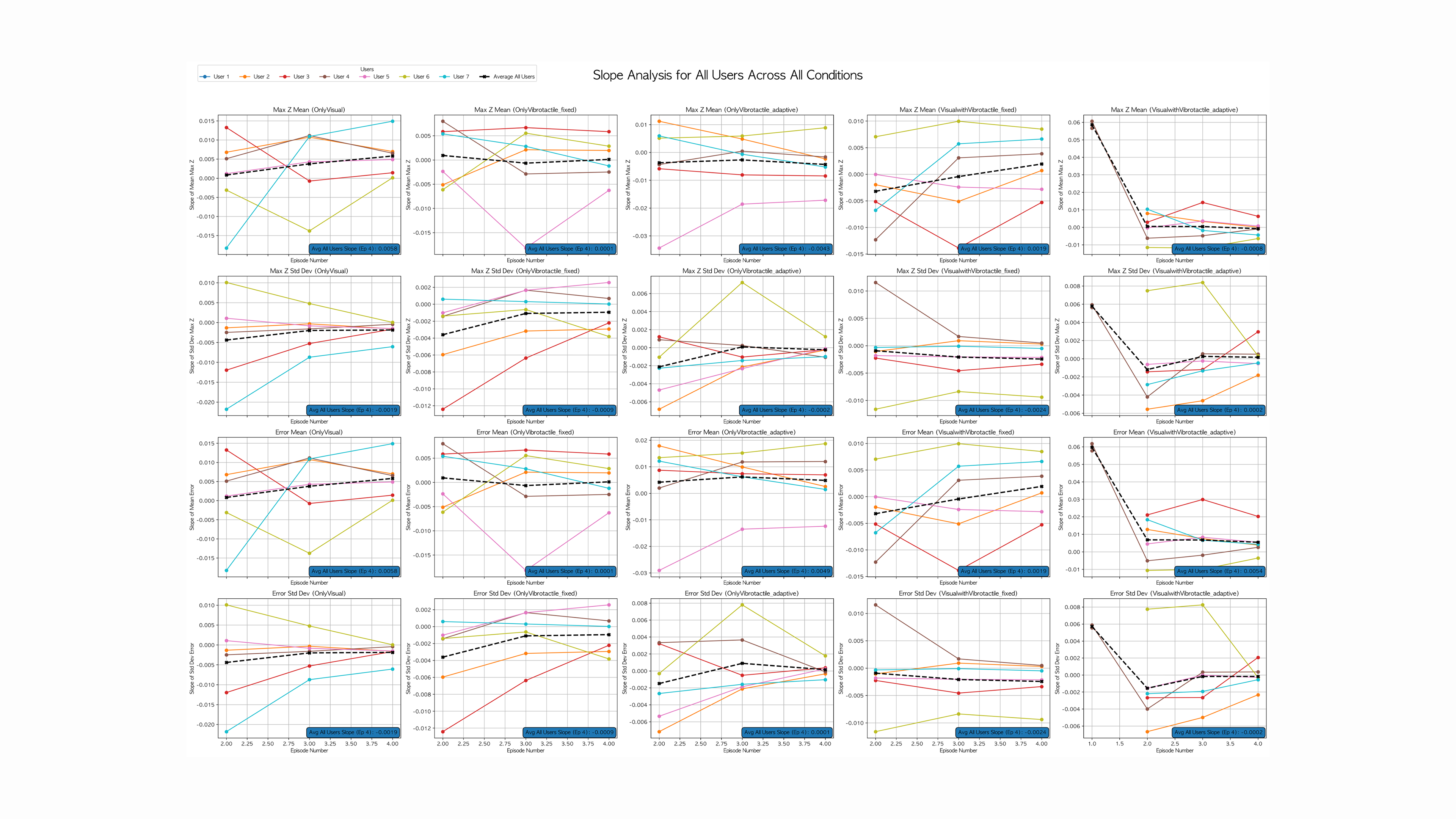
Cutting drift & locked in early
Adaptive feedback settled the press position and held its consistency from the very first trials.
What we had to give up during this project
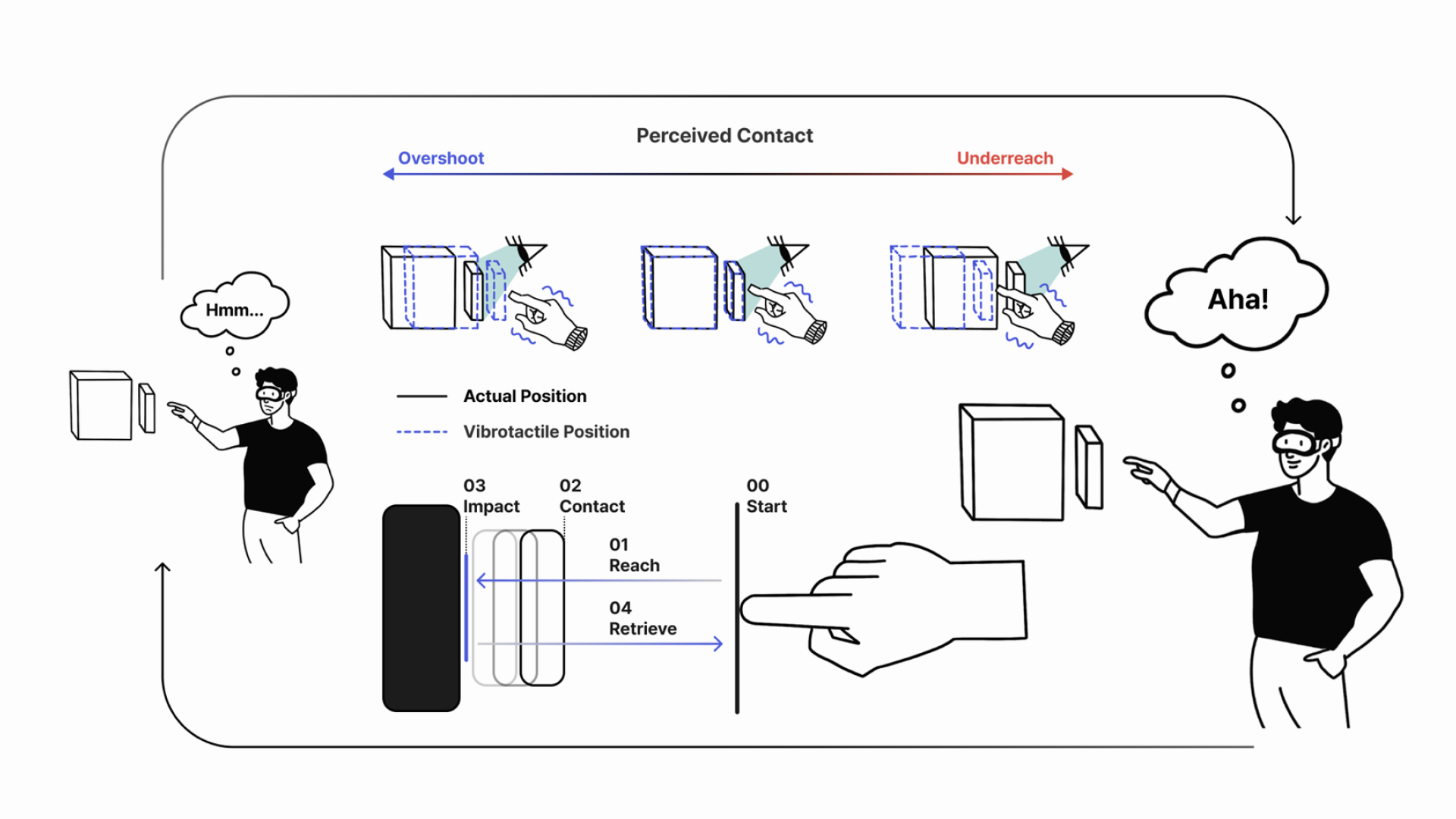
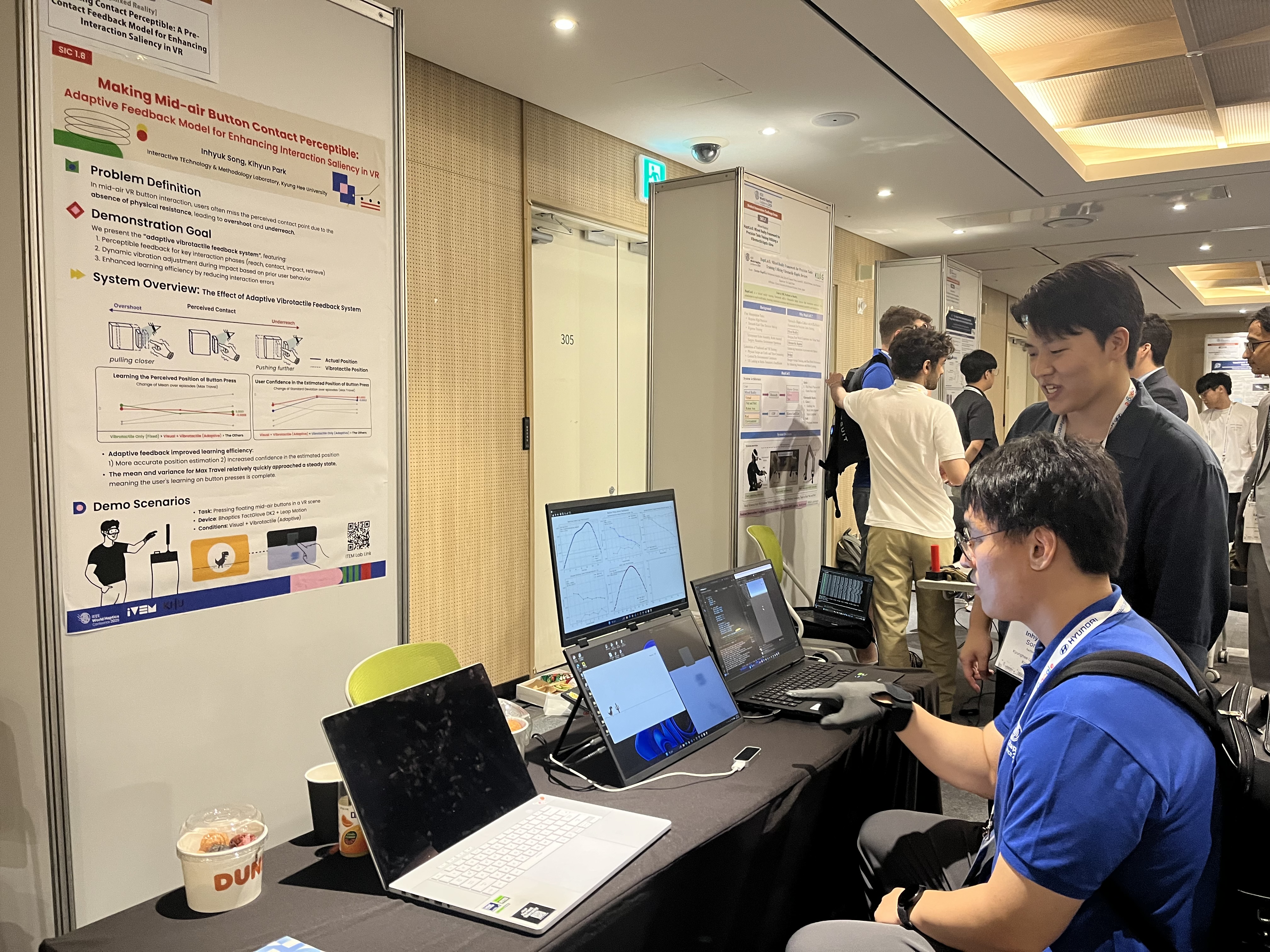
We presented and validated at IEEE WHC 2025
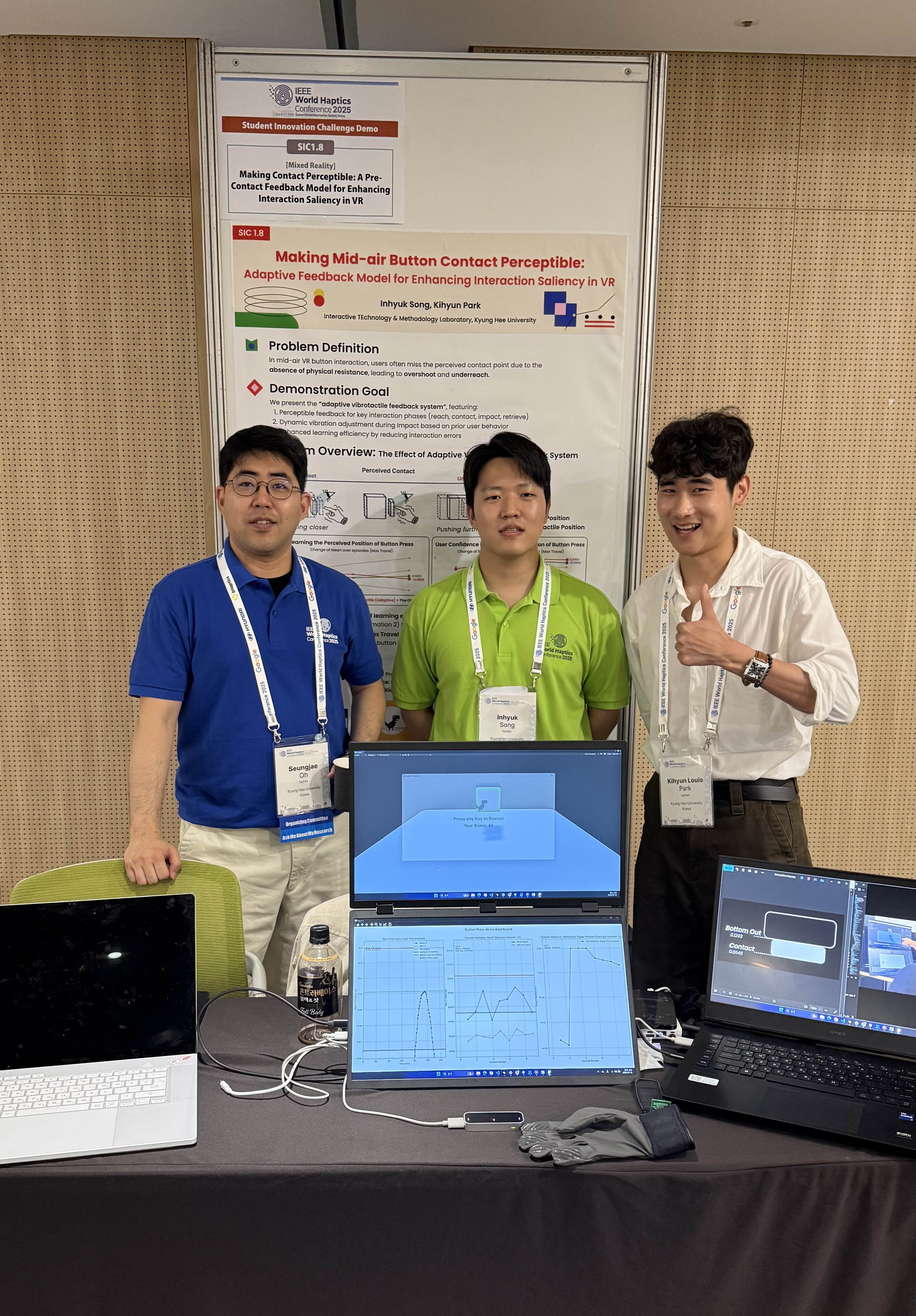
This adaptive feedback system was presented at an IEEE WHC 2025, validating the approach of using adaptive haptics to improve learning in VR interaction. The project itself received positive feedback and was selected as a finalist!
What I learned from this project
At first, I assumed the hard part was designing the interaction, like how to make buttons feel better in VR. The real lesson was upstream: if you can't define what "better" means as a number, you'll end up arguing about just feelings. Splitting a vague goal like "learning" into μ and σ is what turned a subjective debate into a testable one and that's the habit I'm taking into product work.